Hundreds of Canterbury school students will soon take the stage, bringing waiata (song), haka, and te ao Māori (the Māori world) to life at one of Christchurch’s biggest school kapa haka events.
The 2026 Tūhono Kapa Haka Festival will bring schools together on September 19 and 20 for two days of competitive and non-competitive performances.
Tūhono, meaning 'to connect,’ is something Steve Reid and his family have been doing through kapa haka in Christchurch for more than a decade.
After seeing a gap for a Christchurch event that could bring schools together through te ao Māori, Reid turned the idea into a grassroots kapa haka competition in 2013.
Today, it has grown into a festival that gives hundreds of young people from across Canterbury the opportunity to celebrate Māoridom.
Reid’s daughter and Tūhono's marketing manager Amiria Reid said the festival’s growth has shown there is a strong appetite for kapa haka beyond traditional Māori spaces.
“We see a big need in Christchurch for this festival, particularly amongst our mainstream schools with predominately Pākehā tauira.
“This festival is for everyone.”
That is reflected in the students taking part.
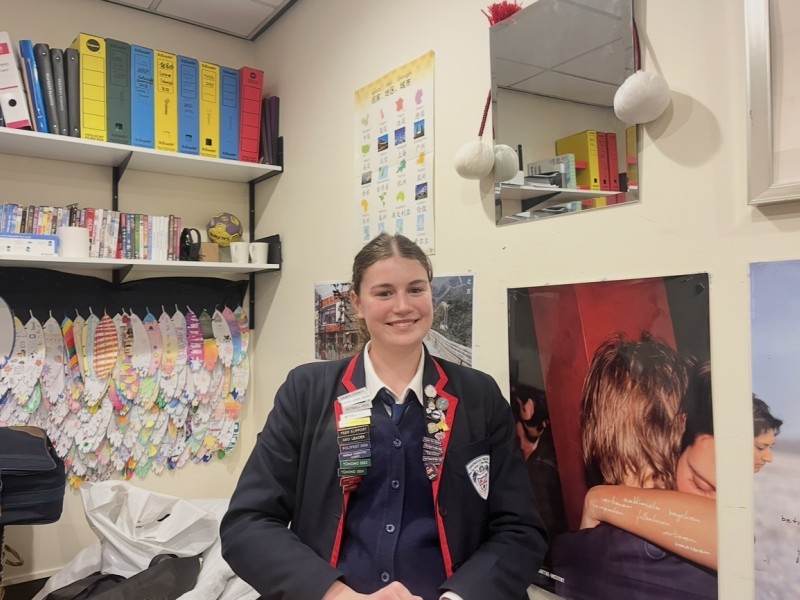
At Christchurch Girls’ High School, 38 ākonga (students) have been practicing weekly since the start of Term 2, with rehearsals increasing to three times a week as the festival draws closer.
Their rōpū (group) includes students with a range of backgrounds and different reasons for performing. While some hope to one day compete at the elite level of Te Matatini, others are simply there to have a good time.
Year 12 student Makere Riwai-Couch, who had been involved with the rōpū since year 9, said kapa haka had given her a way to bring her culture into her school environment.
Raised in te ao Māori and having attended both a kōhanga reo (Māori early childhood centre) and kura kaupapa (Māori medium state school), she said performing at an auraki school (mainstream school) had given her the chance to share her knowledge with others.
“It’s our culture, but to share it around New Zealand, and especially in our school has been really special.
“It’s nice to have other cultures embrace our own.”
For another member of the rōpū, Savannah Kingston, kapa haka was something she actively sought out rather than grew up around.
She started performing because she loved it, only later to find out she was Māori.
“I was just always drawn to it. I know it’s crazy to say but I think it has always been in me.”