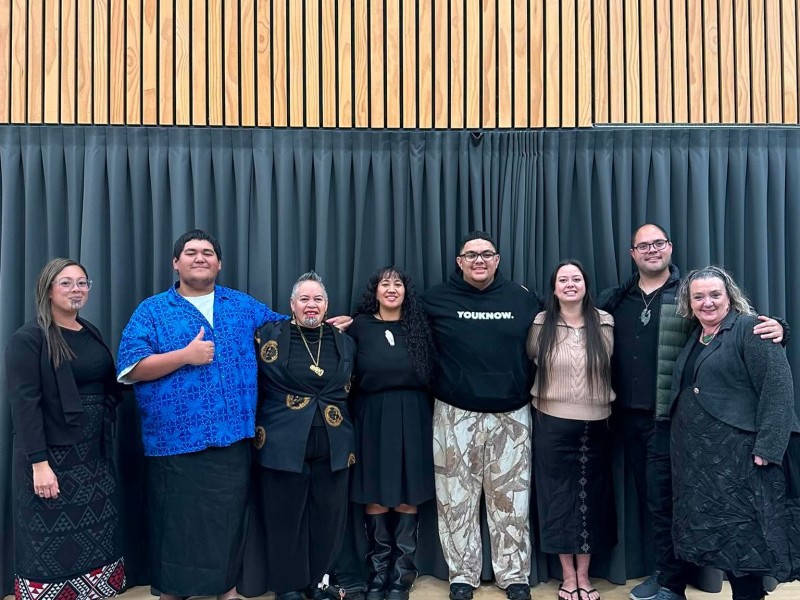
A new set of resources created with, and for, Turi Māori (deaf Māori) is helping bridge a long-standing gap with their language, culture, and identity.
The resources, created by CCS Disability Action in partnership with Turi Māori leaders, feature visual New Zealand Sign Language (NZSL) aids for waiata (songs) Tūtira Mai Ngā Iwi and Tōku Reo, Tōku Ohooho, alongside the karakia (prayer) Rūaumoko.
Two months after their release, Turi Māori leader Starr Phillips said the resources have already helped build confidence within a community where it had not always come easily.
“I’ve learnt that my reo doesn’t have to look or sound the same as someone else’s for it to be valid.
“NZSL is part of how I express my Māori identity, and this kaupapa has given me more confidence in that.”
For years, Turi Māori have faced barriers to accessing te ao Māori (the Māori world), with few resources that reflected both their language and cultural identity.
“Turi Māori can sometimes be left out or have to find our own ways of understanding the language,” Phillips said.
Whaikaha - Ministry of Disabled People NZSL team leader Kelley Bensley said being able to confidently navigate both the deaf and Māori worlds was important to Turi Māori.
Historically, however, those spaces had not always been equally accessible.
NZSL has not always reflected the depth and nuance of Māori concepts, while there are also few interpreters confident working across both te reo Māori and NZSL, she said.
For many Turi Māori, that has meant feeling isolated from important cultural practices such as waiata and karakia, affecting their sense of belonging in te ao Māori.
Those challenges helped shape the need for new resources like the one Phillips helped to create.
The project, funded by Te Mātāwai last year, allowed CCS Disability Action to support Turi Māori leaders to begin conversations and develop the new material.
Over 10 months, the rōpū (group) worked alongside experts in te reo and mātauranga (knowledge) Māori to develop and refine the signs for the waiata and karakia.
For Phillips, the process involved far more than finding NZSL equivalents for Māori words.
The group discussed the meaning behind kupu (words), how the concepts should be visually expressed in NZSL, and how tikanga (protocol) and te reo Māori could be honoured throughout the process.
He said the collaboration had been one of the most meaningful parts of the kaupapa.
It had “helped address that gap by creating resources with Turi Māori, rather than simply for Turi Māori".