

METRONEWS
© New Zealand Broadcasting School 2026

Southern Alps glaciers get brief reprieve - but decline continues

Asha Lyall
GLACIER 1
Snowy glacier with Tyndal glacier in the background.  Earth Sciences New Zealand

A rare boost in snowfall has slowed ice loss this year, but scientists warn it's only temporary.

Fifty years after the country’s first aerial survey, new research shows some glaciers held onto more snow and ice this summer compared to recent years. 

But researchers warn it’s only a temporary break in a long-term trend that is rapidly declining.

Earth Sciences Principal Climate Scientist, Dr Andrew Lorrey said the latest survey results offer a slight improvement - but no cause for celebration.

“This year’s survey showed some glaciers with snow and ice footprints that weren’t quite as small as what we’ve seen in the past two years. But it’s only a stay of execution and not a reversal in the long-term decline of ice coverage here. “
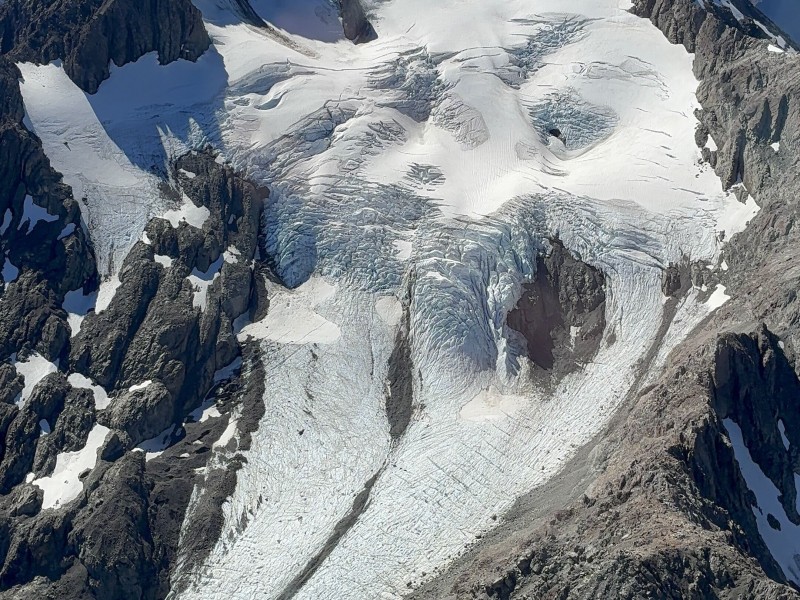
Every March, Earth Sciences NZ researchers get together with scientists from Victoria University of Wellington and the Department of Conservation to fly up above the Southern Alps and take thousands of photos of the glaciers.

These aerial photos will show changes in the terminus and snowline position for each glacier, which will then be compared to previous years.

Advancements are allowing some photos to be turned into 3D models that track ice volume changes.

Through this, scientists are able to tell how much of the previous winter’s snow is left to contribute to long-term glacial ice retention.

GLACIER 3 (1)
Kahutea glacier and Mount Murchison Earth Sciences New Zealand

Aotearoa’s last decade held some of the warmest years on record, with 2025 being the fourth warmest year to date.

Glaciers are feeling the heat, the lack of ice being a visible sign of a warming climate.

Dr Lorrey said more snow retention isn’t enough to bring the glaciers back to life.

"Years like this are few and far between, and when they happen, it isn’t enough to reverse the damage that’s been done in the years prior. To limit the continued trend of glacier decline, climate warming needs to be halted quickly."

A temporary reprieve for Aotearoa’s glaciers is a step in the right direction, but to fix this tremendous problem in NZ’s backyard, something needs to change.