METRONEWS
© New Zealand Broadcasting School 2026

Canterbury landlord slammed with $33,000 fine after years of property neglect

Aleksandra Bogdanova

Complaints made by neighbours caught the interest of the National Manager for the Tenancy Compliance and Investigations Team, who then took this issue to the Tenancy Tribunal.

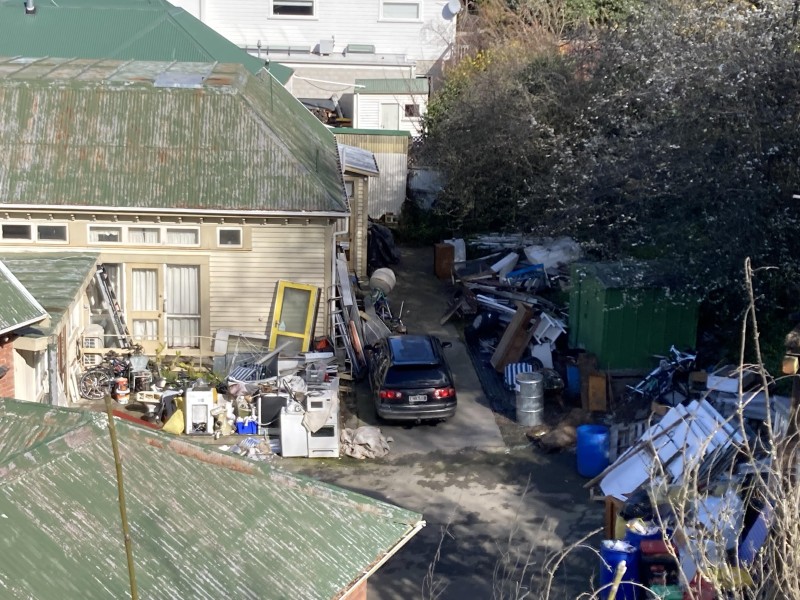
Outdoor photos of one of Hill's properties showing industrial garbage
Outdoor photos of one of Hill's properties showing industrial garbage Supplied / MBIE

The TCIT said Landlord Wayne Hill has a long history of being warned about the state of his rental properties. For years, National Manager Brett Wilson said they have tried to provide further education and guidance on tenancy rules for the property owner.

After a number of years of failures to address unsubstantial living conditions, TCIT took the issue directly to the Tenancy Tribunal, which found him to have breached the Residential Tenancies Act of 1986. Wilson has said it is a first for the branch, but something had to be done.

"They are running a business, and they need to be aware of what they need to do to comply with the legislation around that particular business. And we expect them to be complying with that because that pertains to a warm, dry, safe accommodation," he said.

"Pecuniary penalties are used where the landlord has multiple properties, or in this case a boarding house, where they have more serious breaches. We found this to be one of the more serious cases in terms of the type of behaviour and the type of breaches."

Wilson has explained that their concerns mainly lied with those renting the properties, “While this complaint did not come from a tenant, boarding house compliance remains a priority... It’s important that landlords are held accountable for their actions, even if tenants are unwilling to come forward due to the fear of losing their tenancies."

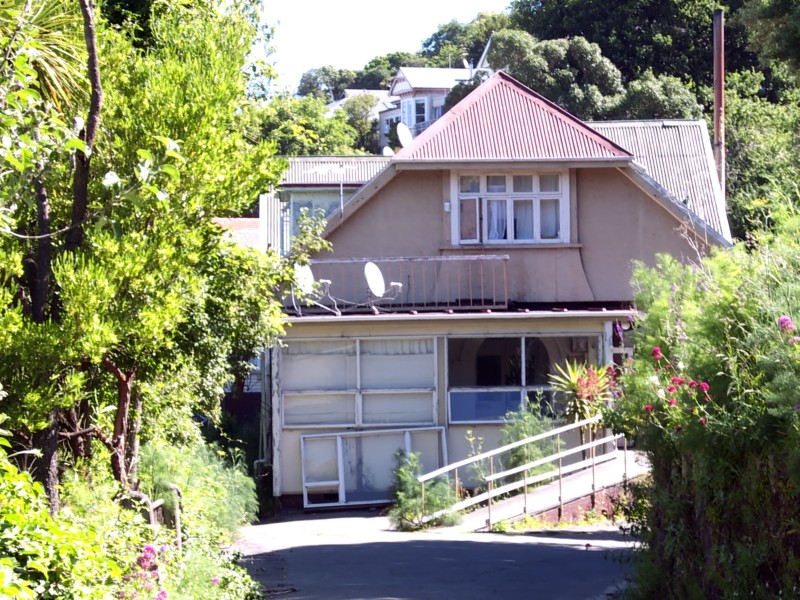
One of Hill's properties on Cressy Terrace
One of Hill's properties on Cressy Terrace Ella Dickens / NZBS

In late 2023, TCIT received complaints from neighbours of rotting industrial grade rubbish and a house in serious disrepair. In March of this year, Hill was advised at a case conference to complete a number of work on his properties to get them up to the healthy homes standards, which included:

  • Industrial rubbish at the exterior of the property was still to be removed.
  • The hallway ceiling just outside of the lounge was rotting and was leaking water at the time of the visit.
  • The stairway wall was yet to be repaired and parts of the guttering were broken and leaking in several areas.
  • A smoke alarm was missing outside one bedroom.

The property in question was used as a boarding house for former prisoners, the homeless, and what Lyttelton locals told Metro News were "unsavoury" people. However, landlord Hill argued the opposite.

Hill has owned 17 properties around Christchurch, many of which are on Cressy Terrace in Lyttelton. In the past, media has referred to him a “slumlord”, which he rebutted as he’s been opening his doors to those seeking shelter in unfortunate times. 

When approached for comment, he said "Yeah nah, I don’t want to. I think it’s all bullsh*t anyways." 

National Manager Wilson assures that cases like these are of strong interest for him and his team at TCIT.

"We recognise that for tenants of boarding houses, there are safety issues. You know, the tragic fire at Loafers Lodge is really good demonstration of the potential issues for boarding house residents."

"They can also be more vulnerable to housing insecurity and have fewer options of where they can go, making them more open to exploitation... So this is why we have things like the pecuniary penalty, to signify that these are more significant cases."

The maximum amount of a pecuniary penalty for an unlawful act is $50,000, with the pecuniary penalty issued out to Hill being $33,000. The money will be given directly to the Crown.