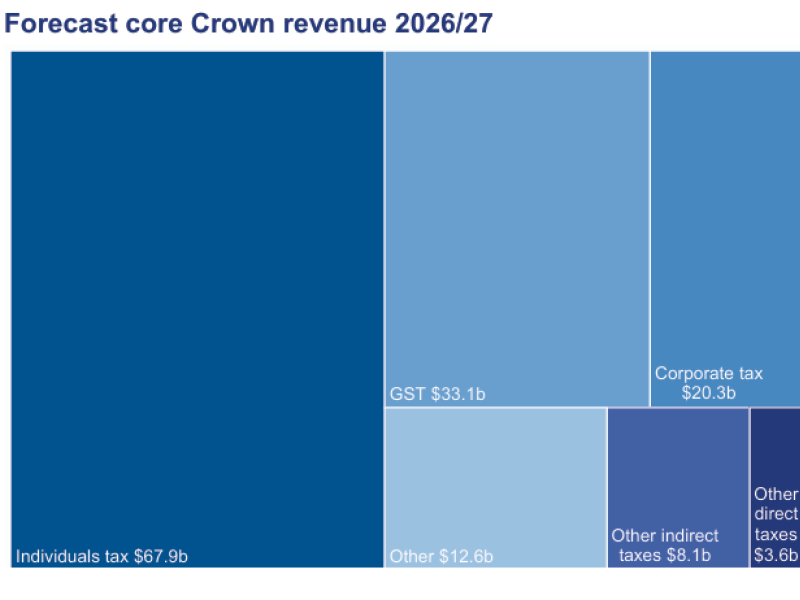
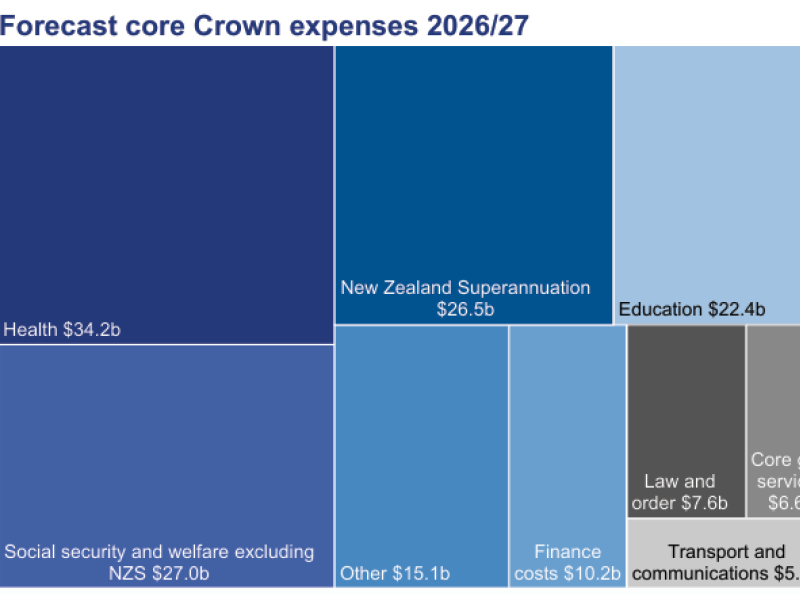
This year's announcements focused on core services like infrastructure, health, law and order, and a fuel response plan. But there is no mention of any cost-of-living relief for most Kiwis.
The biggest talking point for Finance Minister Nicola Willis was the forecasted return to surplus by 2028/29, which is one year earlier than December's predictions.
Health:
This year's budget has delivered a large boost in funding for health, with $5.5 billion pledged to frontline health services.
- Pharmac will receive an extra $54 million to purchase medicines.
- Whangarei Hospital will get a new tower block.
- $34 million to fund 3 days postnatal stays
- $33 million to extend eligibility for the National Bowel Screening Programme
Fuel Response:
The government has set aside an emergency $450-million-dollar fund for temporary fuel relief if required. They have also pledged:
- Additional funding to FENZ, Police, Corrections, Customs, and Education to maintain frontline activities
- Temporary increase in mileage rates for support workers and those travelling for specialist treatment
- $150 million for additional strategic fuel reserves
Infrastructure:
The government has promised investment in hospitals, schools, courthouses, police stations, and defence assets.
- Capital investment of $1.8 billion to build the Cambridge to Piarere Expressway
- $705 million capital and $477 million operating funding to renew and upgrade New Zealand’s rail network
- $294 million to drive forward reforms to New Zealand’s resource management system
- Capital investment of $400 million for a package of state highway resilience upgrades
- $400 million to introduce a new financial incentive for councils to encourage housing growth
Law and Order:
Funding to reform the firearms safety system will be a priority, along with:
- $503 million for frontline Corrections services, including more resources to manage prison growth
- Capital investment of $215 million, including new courthouses in Rotorua and new police stations in Whanganui and Greymouth
- Support for frontline policing, with $50 million of additional funding
- $21 million for Customs to combat drug smuggling and transnational crime
Education:
Money from the axing of fees-free will be redirected to trades and other educational funding.
- A $74 million package to support the implementation of a refreshed curriculum and new national qualifications
- Funding of $87 million for 1,000 more Youth Guarantee places, providing free learning for young people with no or low qualifications
- Capital investment of $470 million to redevelop up to 10 schools, deliver up to 232 additional classrooms and buy land for new schools
- Increasing funding rates to support providers of foundation education of $25 million
- Funding of $69 million to double the number of Trades Academy places to 20,000, providing free trades training to year 11 to 13 students
Defence and Foreign Affairs:
Investments of $2.3 billion dollars in capital and $1.2 billion in operational costs will be given to defence and intelligence services.
- Funding to retain existing Defence Force staff and increase numbers in key areas
- Investment to improve facilities at military bases across New Zealand
- $110 million for international development cooperation, focused on the Pacific.
- Investment to ensure the Anzac-class frigates and HMNZS Canterbury remain operational
- Funding to enable continued operation of aircraft, ships and land forces
- $145 million to ensure a resilient, safe and secure offshore diplomatic and trade network
Revenue:
The Reserve Bank of New Zealand will be getting funding from a new prudential levy on banks and other financial institutions, expected to generate more than $200 million over four years.
- Simplifying fringe benefit tax rules for private motor vehicle use to reduce compliance costs
- Changes to tax rules to help retain talent and support increased foreign investment
- Changes to tax rules for charities and not-for-profits that support the sector and maintain integrity
Energy Security:
The government plans for more capital investment in Genesis Energy to accelerate investment in new generation and firming capacity.
Other Initiatives:
- An additional $184 million for Oranga Tamariki to protect and support children
- $36 million to make the SuperGold Card an official form of ID
- Funding for new technology to improve NZ’s emergency management system.