METRONEWS
© New Zealand Broadcasting School 2026

“They’ve told me that’s it..." Canterbury father seeks life-extending treatment unavailable in NZ

Caitlin Dufty
mike stem cell
48-year-old Mike Oliver is travelling to China to receive cancer treatment not available in New Zealand  Supplied by Mike Oliver

“Basically what the health system is saying to me is, that’s it. You’re done.” 

That’s a concept a Canterbury father is grappling with, as he fights a battle against an incurable blood cancer. 

He’s now calling for better access to life-extending treatments after being told the option that could give him more time isn’t funded here and could cost almost half a million dollars. 

In May last year, 48-year-old Mike Oliver was living a normal life when persistent back pain began to take hold. 

“I had quite a bit of back pain for probably two or three months… and, you know, as a good Kiwi bloke, I just ignored it,” he said. 

It wasn’t until a holiday in Fiji, when the pain became unbearable, that he decided to seek help. Within weeks, after a series of tests, he was given the news he says still doesn’t feel real.

“He sat me down and gave me that message that you never want to hear - that you’ve got cancer.

“It just felt surreal that, shit, I’m actually sitting here being told that you’ve got cancer… and by the way, it’s incurable.”

Late May last year, Mike Oliver was diagnosed with multiple myeloma - a blood cancer affecting plasma cells in the bone marrow. 

He began treatment through the public system, undergoing months of induction therapy - an initial form of chemotherapy treatment. 

He also privately funded an additional drug to give him the best chance.

By October, he underwent a stem cell transplant. 

“It was quite an arduous sort of process… some have an easy ride, some don't," he recalled. 

“It’s [stem cell transplant] meant to knock the disease back and put it [myeloma] into remission.

“If you get it under control, it will be under control for a certain amount of time. But it always finds a way back, and it comes back more aggressive and stronger in different ways,” he explained.

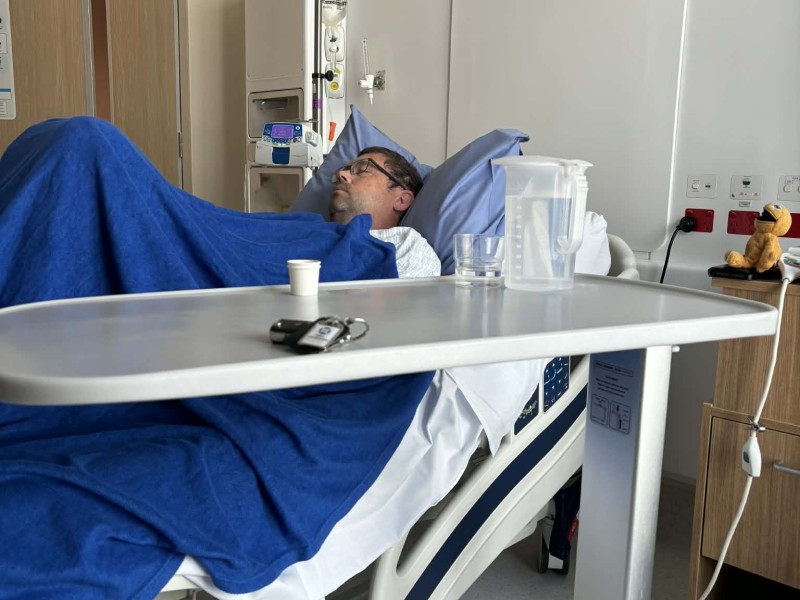
mike in hospital bed
Mike Oliver spent three weeks recovering in Christchurch Hospital following his Stem cell transplant last October Supplied by Mike Oliver

Oliver spent three weeks recovering in Christchurch Hospital following the transplant and was back at work after a few months of recovery. 

Initially, the treatment appeared to be working. 

However, earlier this year, pain in his torso led to further scans - revealing a more aggressive form of the disease known as 'non-secretory myeloma' - a form of the cancer that does not show up on standard blood tests.

Now, Oliver is on what doctors say is the final funded treatment option available in New Zealand.

Despite this, Oliver praises the care he has received from specialists. 

“The specialists have been really good… they walk us through where things are at and what the options are. While they can’t refer me to solutions overseas, they’ve made me aware of them.”

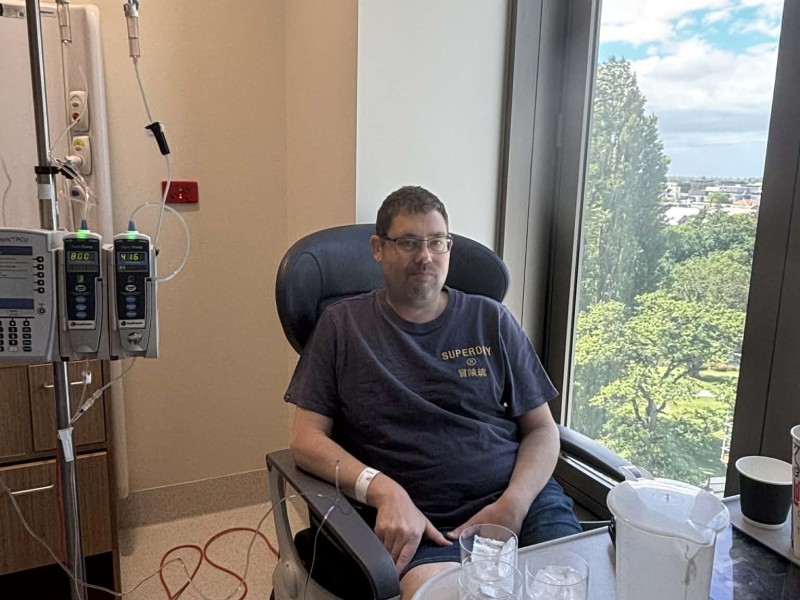
mike in chair
Mike Oliver in Christchurch Hospital, continuing his fight against blood cancer. Supplied by Mike Oliver

But he says the system itself is falling short.

“The options for blood cancer are just so limited… there’s almost no recognition of it.”

Specialists have told him CAR T-cell therapy offers his best chance of survival - however, it is not publicly available here.

Instead, Oliver and his wife Nicky are preparing to travel to China, where the treatment could cost anywhere between $125,000NZD and more than $400,000NZD. 

“There’s a lot of Kiwis in the same position… spending a fortune to go overseas and get treatment because it’s just not available here,” he said. 

His daughter, Georgia, said the reality of needing to leave the country for treatment has been difficult to process. 

“It’s horrible and unfair that we have to go through all of this to receive treatment that is standard of care everywhere else in the world.”

She said the treatment represents more than just medical care - it’s time.

“It [CAR T-cell therapy] will allow us more special time together and more memories to be made as a family,” she said. 

Dr Alicia Didsbury, an Auckland researcher leading efforts to bring CAR T-cell therapy to New Zealand, says this situation is becoming increasingly common. 

“CAR T-cell therapies have become standard of care… but it is not available in New Zealand.” 

She said patients are often forced to raise hundreds of thousands of dollars to access treatment overseas - something many simply cannot do. 

“It’s terrible… we have families contacting us every week saying they’ve reached the end of their treatment options.”

Didsbury’s project aims to make these therapies more accessible and affordable in New Zealand but says significant funding and system changes are needed. 

“There absolutely needs to be a pathway for funding these machines… the fact that we can’t even offer them is terrible.”

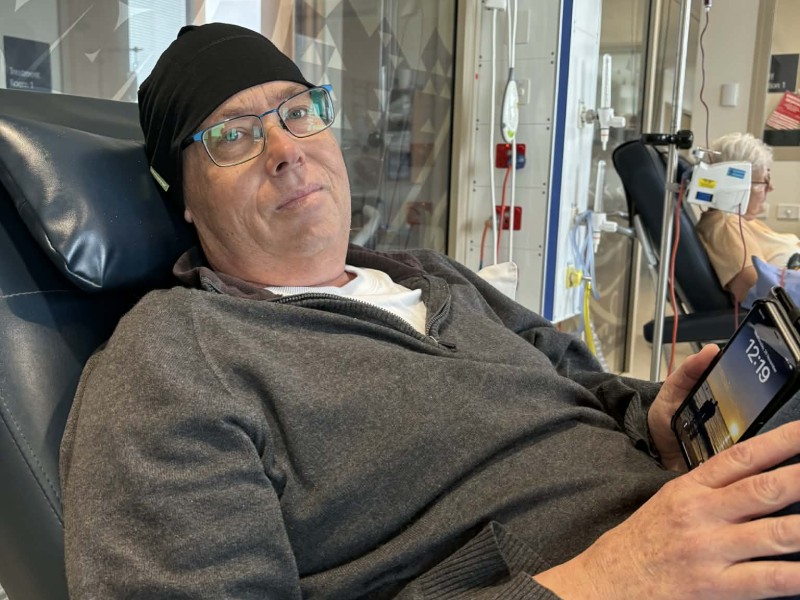
mike getting chemo
Mike Oliver undergoing treatment at Christchurch Hospital, while the life-saving therapy he needs is not publicly available in NZ. Supplied by Mike Oliver

Metro News has approached Pharmac and Health New Zealand for comment. 

For Oliver, the focus now is on getting overseas as quickly as possible. 

The family has launched a Givealittle page, supported by a wave of community fundraising efforts.

“It’s been totally humbling… it’s hard to ask for help, but the support has been overwhelming,” Oliver explained.

He said it’s the support - from friends, family and even strangers - that has carried him through. 

At the heart of it all, Oliver says he is focused on what matters most.

“I just want time with my family. 

“You get told you have this incurable disease… what keeps me going is just wanting to see my girls as long as I can.”