METRONEWS
© New Zealand Broadcasting School 2026

A Kiwi journalist's time in Palestine

Aleksandra Bogdanova

Multimedia journalist Cole Martin describes his time in the West Bank of Palestine.

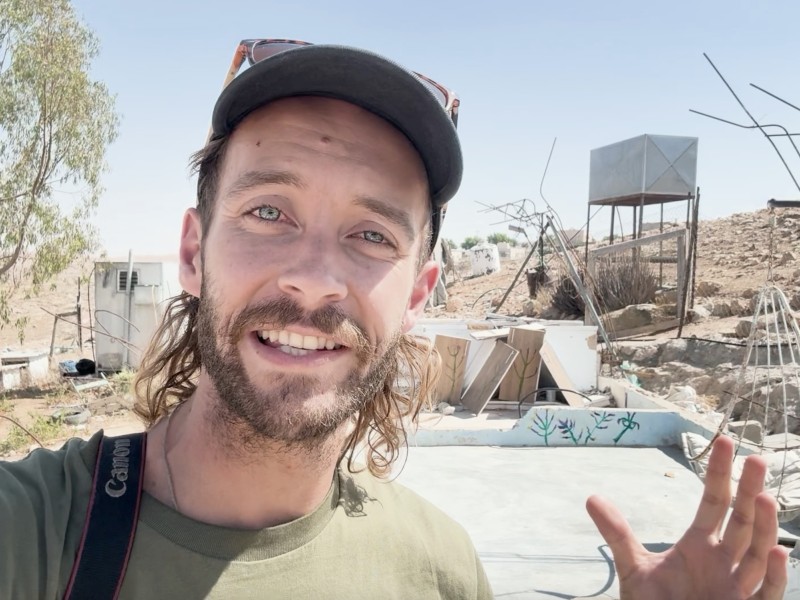
Cole Martin in his video to Prime Minister Christopher Luxon from the West Bank
Cole Martin in his video to Prime Minister Christopher Luxon from the West Bank Cole Martin / Multimedia journalist

For 6 months Cole Martin was the sole Kiwi journalist in the West Bank, right amongst the ongoing Palestine and Israel conflict.

He travelled between Bethlehem, Jerusalem, and other rural villages such as Umm al-Khair in the South Hebron Hills. He described his experience as overwhelming and positively infectious. "Palestine is a place that grows on you, the hospitality and the kindness and the life of people there, the commitment to life and to joy despite all of the hardships is infectious."

Martin started his videography journey hoping to work on feature films like Lord of the Rings, but it was his humanitarian work with World Vision that swayed his decision to enter media. He first visited Palestine in 2019, which revealed to him a gap in mainstream media’s reporting on the rising conflict that he was determined to fill.

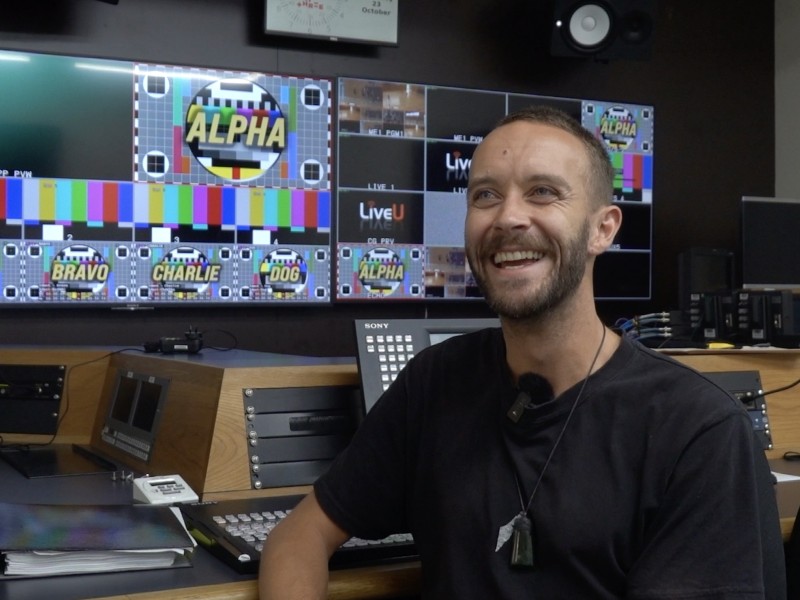
Cole Martin in the New Zealand Broadcasting School control room
Cole Martin in the New Zealand Broadcasting School control room Aleksandra Bogdanova / NZBS

He said the headlines failed to mention truly reflective recounts of the everyday experience, the more personal stories from locals. 

"I think we get talking points. We have the, they say this, but they say this. That's not journalism. Like, yes, report that stuff, but then actually show what's happening" he says. "I think there's been a failure in providing the wider context that this has come from, and amplifying the voices where this has come from." 

During his travels, Martin found his international passport allowed him to travel more freely between military checkpoints. He used this privilege to report live on issues that unfolded during his time in the West Bank, explaining that any fear was overridden by his determination to broadcast the stories that matter.

"If I was beaten as a New Zealander, I would hope and expect that the New Zealand government would actually step up and speak out and say, you know, uphold repercussions for that kind of crime being committed against someone. But even that we're seeing isn't the case in a lot of countries."

Martin explained that he struggled with getting stories published by mainstream New Zealand media, which he chalked up to his use of strong language that he refuses to diminish. "I can't, you know, pretend that that's not happening. I can't not report on that. I can't not call it what it is. These things like apartheid and genocide, they're not terms of slander, they're not kind of debatable things, they are legal terms with clear definitions under international law. And the experts who are working in those spaces to identify those things have overwhelmingly identified those things."

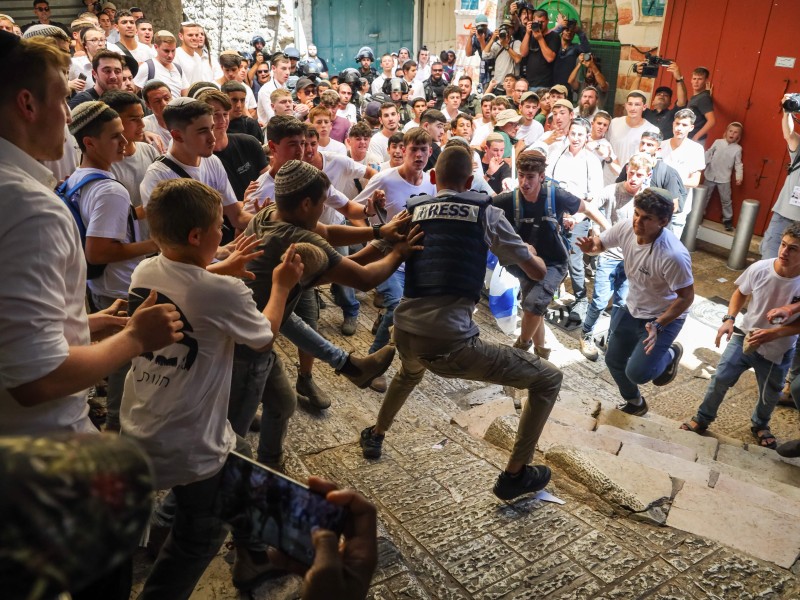
Palestinian Journalist Saif Al Qawasmi was mobbed by ultranationalist Israeli youths at the annual Flag March in Jerusalem (2024)
Palestinian Journalist Saif Al Qawasmi was mobbed by ultranationalist Israeli youths at the annual Flag March in Jerusalem (2024) Cole Martin / Multimedia journalist

The most defining moment for Martin was losing his friend Awdah Hathaleen.

Hathaleen himself was an activist, a father, a football fan and a consultant for the 2024 award winning documentary “No Other Land”. On July 28th, 2025, a rural Israeli settler shot him. "He was filming as one of these settlers got out, wheeled around with a gun and fired off two shots. And one of these shots hit my friend Awdah and killed him."

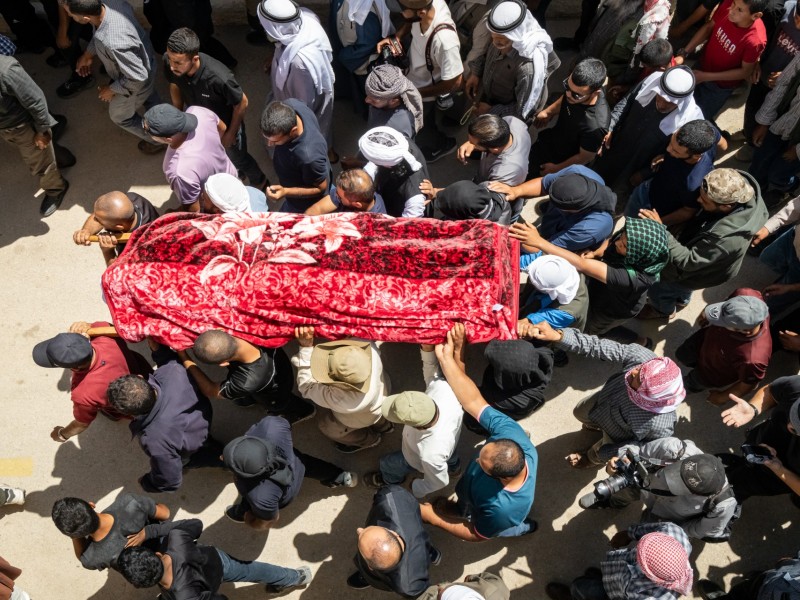
Martin documented his funeral, which took place outside his hometown of Umm al-Khair due to Israeli intervention.

Awdah Hathaleen's body is carried by family and friends
Awdah Hathaleen's body is carried by family and friends Cole Martin / Multimedia journalist

Martin has since returned to Aotearoa and journeys around the country recounting his time in Palestine, a distance he struggles with, but a distance he will soon close. 

"Being here, it is difficult being away from it all," he says. "You want to keep sharing about it, but it doesn't have the same relevancy that it does when you're there on the ground... I miss it a lot, I miss the people, I miss my friends and I'm definitely keen to get back there and continue reporting."